
http://info.afrindex.com
China-Africa Trade Information Service
http://info.afrindex.com
China-Africa Trade Information Service
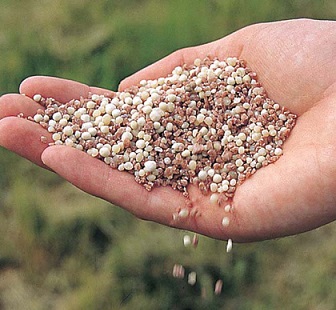
Image from Mr. Fothergill's
Africa's population is growing rapidly and needs to produce enough food to feed a growing population. However, Nigeria is said to be one of the countries with the most degraded land degradation in the world, and the range of additional land for cultivation is limited, which requires a shift to fertilizers and other supplementary inputs to increase food and agricultural production.
For one, Africa's population is growing fast, requiring the production of enough food to feed the growing population. The snag, however, is that Nigerian soil and those of other African countries are said to be among the most degraded in the world.
Besides, the scope for bringing additional land under cultivation is limited. This, according to experts, has necessitated the need to turn to fertilisers and other complementary inputs to increase food and agricultural production.
At the event, which was sponsored by Office Cherifien des Phosphate (OCP) Africa, industry experts and stakeholders agreed that the fertiliser industry will continue to play a central role in feeding Africa's ever-growing population and agricultural demands.
The delegates, who included industry executives, government and public sector representatives, fertiliser suppliers, farmer organisations and logistics companies, among others shared insights, identified problems and presented joint solutions on how to boost Africa's agricultural productivity through increased use of fertiliser.
The conference, which brought together over 500 key players from the fertiliser supply chain, expressed worries over Africa's low fertiliser application or usage rate.
African Union's (AU's) Rural Economy and Agriculture High Commissioner, Ms Josefa Sacko, also attributed the situation to poor policies, low investment, unattractive investment conditions and ill-equipped smallholder farmers.
In the special AU Summit of Heads of State and Governments, which held in Nigeria in June 2006, adopted the Abuja Declaration on Fertiliser for an African Green Revolution.
The Declaration was a commitment to increase Africa's fertiliser use from the then-average of 8kg per hectare to 50kg per hectare by 2015.
The establishment of the AFFM was agreed upon at the 2006 African Fertiliser Summit in Abuja, Nigeria, to meet the financing requirements of the various activities agreed on to boost the growth of the fertiliser industry in Africa.

