
http://info.afrindex.com
China-Africa Trade Information Service
http://info.afrindex.com
China-Africa Trade Information Service
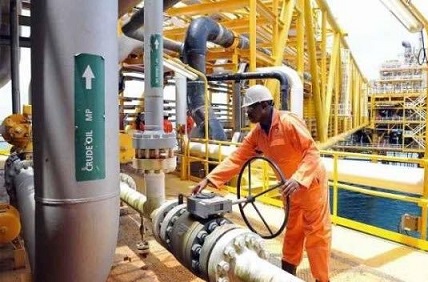
Image from leadership.ng
According to experts, the federal government's new natural gas-based industrialization (GBI) policy will generate a large number of jobs.
At least 60 million jobs are targeted to come through its implementation, according to a study by experts in the industry.
Mr. Louis Brown Ogbeifun of the African Initiative for Transparency, Accountability and Responsible Leadership, AfriTAL commented on the initiative for Oil Sector Transparency and Reform (FOSTER) on Co-location framework as a strategy for gas-based Industrialisation (GBI) implementation that is capable of creating 60 million jobs in the next 10 years in Nigeria.
FOSTER is an international organisation that works in partnership with national decision makers to diagnose policy problems, develop public policy, support its implementation, and evaluate its impact and by bringing together national and international expertise, it helps governments in these countries to implement impactful public policy that will bring about lasting, positive change.
The co-location concept is a practice which promotes optimisation through one or more plants sharing mature pre-existing infrastructure, rather than building their own infrastructure, or waiting for a third party to do so.
Ogbeifun explained that since this is a new concept to the oil and gas space, it is crucial for the country to understand the concept of colocation strategy for the implementation of gas-based industrialisation projects in Nigeria. He said the buy-in into the initiative by government had become imperative as the nation today requires a radical change that would transform the oil and gas industry into a world-class energy sector.
Ogbeifun stated that in spite of the reputation of Nigeria as the second largest producer of liquefied petroleum gas, LPG, in Africa, progressing her per capita usage of LPG has been stalled by failures traceable to systemic corruption, lack of political will to review and implement policies, rent-seeking, entrenching the culture of promoting conflict entrepreneurs, which leads to non-bankability of oil and gas investments and projects, and painful abandonment of projects, neglectful under-development of the market and the oil producing environments.
Nigeria, he said, is a blessed nation with abundant and enormous gas resources that is capable of generating massive employment that would ease the pressure of unemployment on our teeming youths, but sadly the country has not fully harnessed the opportunities presented by the value chain of all the products available within the oil and gas streams.
Though the Nigerian Liquefied Natural Gas (NLNG) has done well in its quest to earn scarce foreign exchange for Nigeria and launch the country into the international markets, it has been unable to satisfy Nigeria’s domestic demand. For instance, Nigerian LPG production was estimated at 2 million metric tonnes per annum (MTPA) in 2016, but her annual per capita consumption of 2.3kg remains lower than the West African regional average of 3.5kg and the Sub-Saharan African average of 2.5kg.
"Paradoxically, Nigeria is presently exporting her crude and importing finished products for use in Nigeria. Over 90 per cent of her domestically produced Liquefied Petroleum Gas is exported and, in return, we massively import LPG for local consumption."

