
http://info.afrindex.com
China-Africa Trade Information Service
http://info.afrindex.com
China-Africa Trade Information Service
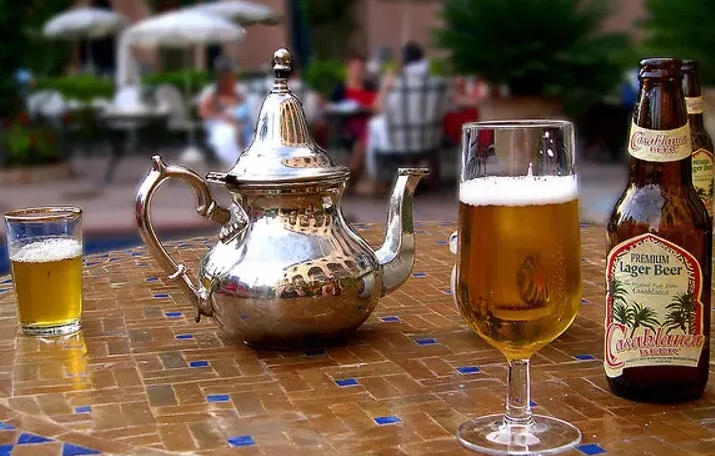
Image from Moroccoworldnews
A recent report by BarthHaas, a leading global hop supplier, reveals that Morocco’s beer production has declined to 818,000 hectoliters in 2024, positioning the country at 108th globally in beer production.
This represents a decrease of approximately 17,000 hectoliters compared to 2023, when production reached 835,000 hectoliters.
The report, which analyzes global beer and hop markets, shows Morocco lagging behind other North African and Middle Eastern countries. Tunisia leads regional production with 1.933 million hectoliters, followed by Algeria with 1.503 million hectoliters, and Egypt with 900,000 hectoliters.
Morocco ranks fourth regionally, ahead of Lebanon (384,000 hectoliters) and Jordan (247,000 hectoliters). Palestine recorded the lowest production with only 4,000 hectoliters.
The global beer market context shows Morocco’s modest position in the industry. According to the BarthHaas report, global beer production in 2024 reached 1.875 billion hectoliters, representing a slight decrease of 0.3% from 2023.
China dominates global production with 341 million hectoliters (18.2% of world production), followed by the USA with 184.5 million hectoliters (9.8%), Brazil with 147.4 million hectoliters (7.9%), and Mexico with nearly 145 million hectoliters (7.7%).
Marking a notable uptick, African beer production rose 6.7% in 2024, reaching over 160 million hectoliters. This growth was primarily driven by South Africa, Angola, and Ethiopia, which increased their production by 8% to 35%. In contrast to this continental trend, Morocco’s production declined.
Beer was introduced to Morocco during the French colonial period in the 20th century. Currently, Société des Brasseries du Maroc (SBM), part of the Castel Group, oversees beer production and distribution in the country, primarily serving tourists in hotels and bars.
Popular Moroccan beers include Spéciale Flag (pilsner), Stork (light lager), and the premium brand Casablanca, which is also exported internationally. Breweries are located in Fes, Tangier, and Casablanca, with a bottling facility in Marrakech. Heineken, previously brewed locally, is now imported and remains the best-selling international beer in Morocco.
Between a law prohibiting sale to Muslims and an economy benefiting from production
Morocco’s legal framework on alcohol is riddled with contradictions. A royal decree issued in 1967 explicitly prohibits selling alcoholic beverages to Moroccan Muslims or providing it to them for free.
Article 28 of this law imposes fines or imprisonment for up to six months on violators. This creates a fundamental legal paradox in a country where the state considers all Moroccans Muslims by default – except for the small Jewish minority, officially recognized in the 2011 Constitution, and numbering no more than 2,000 individuals.
While vendors are legally barred from asking customers about their religion, the burden of responsibility falls on the seller if alcohol is served to Muslims. To avoid liability, many shops simply refuse to issue receipts when the buyer is Moroccan – an unspoken tactic that erases any trace of the transaction.
Despite these restrictions, alcohol is sold openly in supermarkets, specialized liquor shops, and licensed bars and hotels, especially those catering to tourists.
The law bans its sale near religious sites, cemeteries, military zones, hospitals, schools, or any location deemed sensitive or requiring public decency. Minimum distance requirements are enforced – at least on paper – through administrative decisions by local authorities. Public intoxication, however, remains a punishable offense.
However, consumption statistics tell a vastly different story. Moroccans consume approximately 131 million liters of alcohol annually, predominantly beer.
These consumption figures clearly cannot be pinned on foreign tourists or non-Muslim minorities, who make up only a tiny fraction of the population. The inescapable reality is that a substantial number of Moroccan Muslims are consuming alcohol “in defiance of the law.”
According to the World Health Organization (WHO), beer dominates consumption patterns, accounting for 44% of all alcoholic beverages consumed in Morocco. Wine follows at 36%, with the remaining 20% distributed among other types of alcoholic drinks.
Even more striking, the WHO indicates that Moroccans consume about 17 liters of alcoholic beverages per person annually, ranking fifth among Arab countries and exceeding consumption in countries like France and the United States.
This creates a profound societal contradiction where the state benefits economically from a product that most citizens are legally forbidden from purchasing.
Morocco is eyeing MAD 16.4 billion (approximately $1.58 billion) in tax revenue from cigarettes and alcohol for 2025, according to Finance Bill No.60.24. Beer alone is expected to generate MAD 1.55 billion ($149.76 million) in tax revenue.
The state’s approach to alcohol regulation is a masterclass in calculated ambiguity: while it upholds legal restrictions rooted in religious doctrine, it simultaneously reaps important tax revenues from a thriving alcohol industry.
Epitomizing this duality is its status as the Arab world’s largest wine producer, with the country devoting 37,000 acres to vineyards for wine-making.

